What Apocalypse Movies Taught Me About Building a Community
Orange Cat
Author
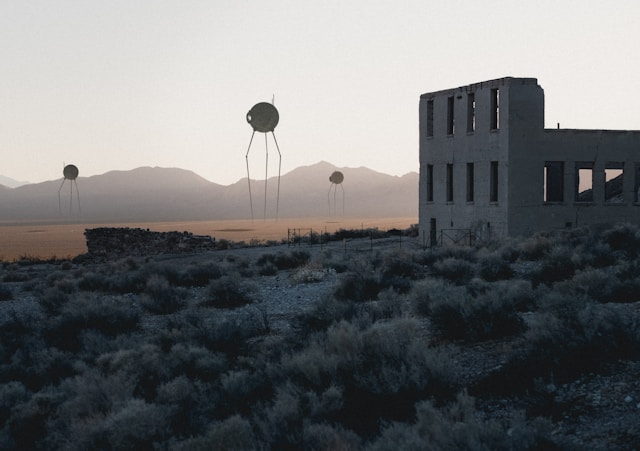
Apocalypse movies are really community-management simulations with worse lighting.
I’m a fan of apocalypse movies. The Last of Us, 3 Body Problem, and A Quiet Place are my favourites. The Walking Dead—I mostly enjoy reading the spoilers instead of watching all of it. 😂
They are not really about zombies, aliens, or monsters. They are about what happens when food, information, safety, trust, and the invisible rules keeping people civil suddenly fail.
Here’s what they taught me.
1. Don’t announce your resources or your location
3 Body Problem gives this a cosmic version: broadcasting your coordinates is not automatically a good idea. Someone may hear you—and not arrive as a friend.
Use case: Share enough about a project for the right people to find it. Keep private details—members, homes, tools, money, seed collections, and internal decisions—inside the trusted circle.
2. Test trust first
Familiarity is not the same as trustworthiness under scarcity. The Walking Dead keeps proving it: the Governor appears civilized until he is not; Terminus looks like a sanctuary until it definitely is not.
Use case: Start new members with small, low-risk responsibilities. Can they communicate clearly, respect boundaries, show up, and handle disagreement without making the whole group miserable? Let trust grow from evidence, not vibes.
3. Don’t attract unnecessary attention
A Quiet Place makes this extremely literal: survival depends on understanding what attracts danger, then designing life around avoiding it.
Use case: Not every threat is a monster with excellent hearing. Sometimes it is public drama, oversharing, conflict, or looking visibly resource-rich in the wrong room. Keep your signal intentional.
4. Build distributed systems
No single point of failure. If one person, app, payment method, seed supplier, or group chat disappears, the entire project should not collapse with it.
Use case: Have more than one admin, more than one communication channel, saved documents, multiple seed sources, and skills shared across the group.
5. Find somewhere stable—but don’t make it an obvious target
The Last of Us understands this. The goal is not to wander forever looking dramatic in ruined cities. You need a place where people can sleep, grow food, repair things, make rules, and become human again. But stability has a visibility problem: a farm means food, water, shelter, land, and probably supplies.
In apocalypse logic, everyone sees a farm and thinks: “Oh, they have resources.” 💀
Use case: Build a real home base, but do not publicly broadcast every useful thing inside it.
6. Preserve optionality
Have multiple resources, routes, skills, and fallback plans. 3 Body Problem is a reminder that the environment can change on a timeline you did not choose.
Use case: Learn one physical skill, one social skill, and one technical skill. Grow some food, know your neighbours, keep important information offline, and do not depend entirely on one platform.
7. Establish the rules before letting new members in
Otherwise you are just importing a new plot problem. 😂
Use case: Decide the mission, term, boundaries, and conflict process before the group grows. It is easier to explain a rule at the door than to invent one after someone has already damaged the room.
8. Shoot first, ask later. 💀
This stays in the movie section.
In real life: pause, verify, set a boundary, and avoid making irreversible decisions in panic.
So instead of waiting for the apocalypse:
- Learn to garden now. 🌱 We made a calendar to help you know what to grow and when.
- Learn to read the stars and the sky. 🌙✨ At minimum, you’ll know direction, season, and when the full-moon lunatics are coming out. 😂
Humans are worse than physical zombies.
At least zombies are predictable.