The Curriculum I Wish I Had (Part 1): Seven Subjects School Never Offered
Bee Builder
Author
The curriculum I actually got was optimized for a test. The curriculum I wish I'd had was optimized for a life.
Looking back, I spent my working life optimizing systems for other people. But the situations have changed — AI, global warming, a food crisis on the way — and I've noticed how much we never learned.
Reflecting on it, the curriculum I actually got was optimized for a test. The curriculum I wish I'd had was optimized for life. Here's Part 1: seven things I'd put back in, roughly in the order they occurred to me while making this list.
1. Gardening — Not a Unit, a Lifelong Practice
Most schools that "do gardening" treat it as a spring unit: plant a bean in a cup, watch it sprout, move on. What I wanted was a lifelong practice instead — because humans have more in common with plants than most of us think. Keep at it long enough and you build an intuition you can't fully explain: you start to just know when a plant needs water, or that the soil feels wrong before you can say why. Nothing mystical about it — that's just repetition doing what repetition does, the same way it works for anything else you stay with for years.
What actually builds that intuition is the boring, unglamorous part: soil. We don't know how to mix it, what different plants actually want in terms of water, or how a cover crop changes nitrogen in the ground. Fertilizing belongs here too, and it isn't separate from the food-waste problem — composting turns kitchen scraps back into soil instead of a landfill, and it's a large enough lever that farms using compost regularly cut their synthetic fertilizer costs by 15–20% a year [1]. That's the part that turns "I did a garden once" into "I can grow food anywhere I end up living" — a skill, not a memory.
2. Animal Studies — Mostly About Learning to Watch
Quick test: are the worker bees in a garden male or female? Most people guess male. They (We?) 're actually sterile females — the queen is the only fertile one, and the workers do every bit of the colony's real work [2]. That kind of fact is everywhere once you're actually watching instead of skimming past.
School gives you the surface layer — phylum, mitochondria, a one-line mention of symbiosis or parasitism — and stops there. What it skips is the deep, specific relationships that only show up if you're watching the same patch of ground for years: night-blooming jasmine and the moths that pollinate it, flowering timed to exactly when those moths are active, some plant-pollinator pairs coevolved so tightly that neither reproduces without the other [3]. Integrated with gardening, animal studies stop being a taxonomy chart and become something closer to watching a relationship play out in real time.
3. Board Games — Yes, Actually, Board Games
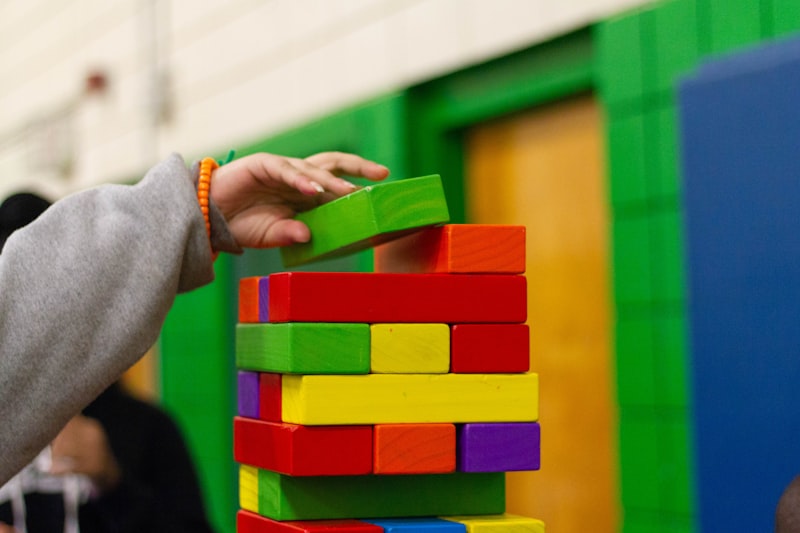
This one sounds like a joke until you look at the trial data. Randomized controlled trials on children playing structured board and card games — the reveal-and-react, planning-under-constraint kind, not just Candyland — show measurable improvements in cognitive flexibility, inhibition, and working memory [4][5]. Other trials link regular board-game play in school settings to gains in academic tasks and social cognition, on top of the obvious stuff — turn-taking, losing gracefully, reading another person's strategy [6][7].
None of that is why I actually want this in the curriculum, though. I want it because board games are one of the only childhood activities that teach you to think several moves ahead while another person is actively trying to stop you — which turns out to be most of adult life.
4. Cooking, Preservation, and Foraging — Group Cooking, Not Home Ec
Home ec, where it still exists, tends to be one kid at one stove following a recipe card. What I wanted was closer to how food actually gets made in a household that isn't ordering in: a group in a kitchen, dividing labor, working from what's actually available, and doing something with the surplus — pickling, drying, fermenting — instead of throwing it out.
Foraging belongs in the same bucket. Human childhood itself may be partly shaped by how long it takes to learn to forage safely and well — some anthropologists argue this is one of the reasons human childhood is so much longer than other primates', because food-gathering skill takes years of supervised practice to acquire [8]. We've mostly removed the "years of supervised practice" part and kept the long childhood, which seems like a waste of the runway.
5. Fixing Things — From a Light Bulb to a Car Wheel
This is the one where the data is the most damning. Only 9% of Gen Z has done something as basic as bleeding a radiator, against 53% of baby boomers [9]. A recent UK survey found 41% of Gen Z don't feel confident in their own basic DIY ability, and the lack of it isn't free — it's costing that generation real money every year in call-outs for jobs a bit of instruction would have covered [9][10]. Separately, the large majority of college graduates say, after the fact, that they wish they'd been taught more practical skills before they were sent out into the world [10].
I don't think this is really about light bulbs or wheels. It's about the difference between a person who assumes something broken means "call someone" and a person who assumes it means "let's have a look." That assumption gets set early, and it's not set by a textbook.
6. Self-Defense — Physical and Mental
Not a sport, not a belt system to collect — protection, both physical and mental. The physical side is what people usually picture: evaluations of self-defense and anti-bullying programs for kids report real drops in bullying incidents, plus gains in confidence that show up whether or not a kid ever has to use it [11][12]. The mental side matters just as much and gets taught even less — how to draw a boundary, how to notice you're being exploited, how to say no to someone who's counting on you not knowing how. Both are protection. We only ever taught the first half.
7. Drama Class and Script Writing — The World's a Stage, So Learn to Play It
We all learned that line — "all the world's a stage" — as a quote to memorize, not a practice to try. I'd flip that: teach kids to actually play their part well, not just recite the metaphor. Drama pedagogy has a decent evidence base behind it now — trials show gains in empathy, theory of mind, self-regulation, and collaborative behavior in kids who go through structured creative-drama programs [13][14]. Improvisation forces real-time thinking a scripted answer never asks for, and knowing how to read a room and play your role is most of what "performing well" in adult life actually means.
The script-writing half matters just as much. Most of us recite lines someone else wrote — for us, about us, or over us — and never learn that a script is something you're allowed to write yourself, badly, and rewrite. That's worth more than knowing who coined the original quote.
That's Part 1 — the first seven. None of these show up on a report card, and that's sort of the point: the things that actually determine whether an adult can grow their own food, fix what breaks, protect themselves, work well with a group, and say something true out loud in front of other people were treated, in my education, as extracurricular at best. I don't think they should have been.
You might be thinking, fair, but we can't move back in time. True. But most of this doesn't require a time machine — it requires a Saturday. Start a garden bed with your own kids this weekend. Watch the bees with them instead of telling them what a bee is. Play a board game instead of handing over a screen. None of that needs a school board's permission or a curriculum committee's approval.
And you don't need to wait for someone else to build the version of this you wish existed, either — find a community already doing pieces of it, or create one yourself. You don't need others to tell you what to do, do you?
Sources
[1] Composting Statistics — worldmetrics.org
[2] Why Can't Female Worker Bees Reproduce? — Science ABC
[3] The Intertwined Attractions of Plants, Moths, and People — Arnold Arboretum
[4] Just Play Cognitive Modern Board and Card Games: A Randomized Controlled Trial — PMC
[6] Do you play in class? Board games to promote cognitive and educational development — ScienceDirect
[8] Foraging complexity and the evolution of childhood — PMC
[9] Gen Z's Lack Of DIY Skills Is Costing Them Thousands Each Year — InsightDIY
[10] 20 Essential Skills Gen Z Is Losing — Back in Time Today
[12] From Target to Confident: How Martial Arts Training Stops Bullying — TSK
[14] Developing Children's Socio-Emotional Competencies Through Drama Pedagogy Training — PMC