Australian Education in 2026: The Real Numbers Behind the System
Orange Cat
Author
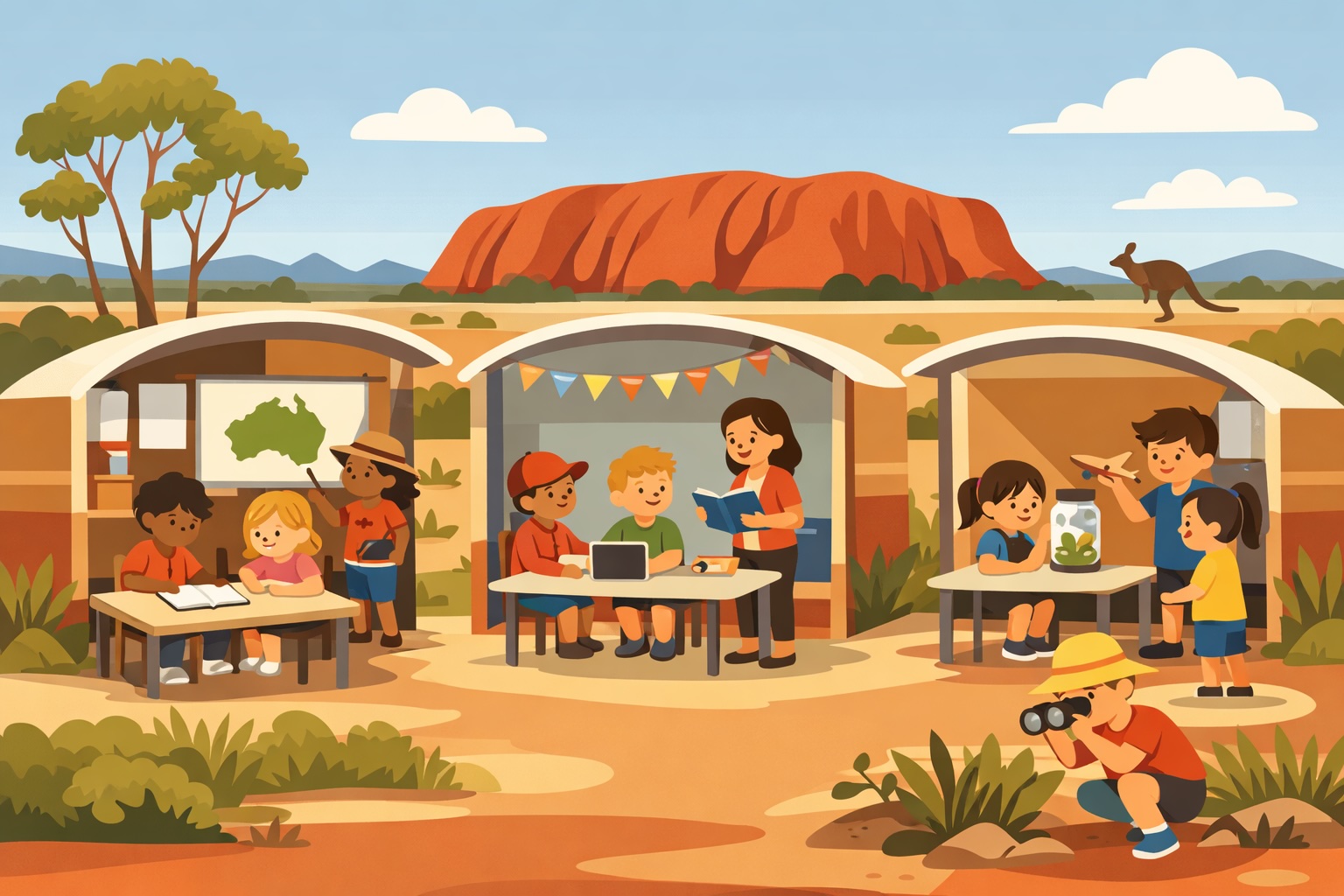
Homeschooling is currently the fastest-growing part of Australia's education system. While most students over 4.13 million still attend traditional schools, alternative learning is taking off. In 2025, there are over 45,000 registered homeschooled students nationwide, which is more than double the numbers from before the pandemic. In states like Queensland, homeschooling has grown by 135 % since 2021.
Many of these families are "accidental homeschoolers." They didn't originally plan to pull their kids out of traditional schools. However, they felt they had to because mainstream schools are struggling to handle bullying, severe anxiety, learning differences (like ADHD and Autism), and "school refusal." On top of that, disagreements between parents and schools about using AI in the classroom have sped up this change.
Whether you are a parent wanting a better learning environment for your child, or a teacher looking for a more fulfilling job, understanding the current market is the first step.
🇦🇺 Australia Market Rates 2026
Category | Standard Retail (1-on-1 Hourly) | Wholesale/Group Rate (Per Person) | Wholesale Discount | Full-time Teacher Wage Range (Hourly Eq.) | Full-time Students/Class |
Primary School | $40 - $90 | $30 - $50 | 30% - 45% | $42.00 (Grad) - $70.00 (HAT) | 20 - 28 |
Lower Secondary (Yr 7-10) | $50 - $90 | $35 - $60 | 30% - 50% | $42.00 (Grad) - $70.00 (HAT) | 22 - 30 |
Senior Secondary (Yr 11-12) | $80 - $150 | $45 - $80 | 35% - 50% | $45.00 (Proficient) - $75.00 (HAT) | 15 - 25 |
HSC/VCE/ATAR Prep | $90 - $160+ | $50 - $90 | 40% - 50% | $50.00 (Specialist) - $80.00+ (Head Teacher) | 15 - 25 |
University | $60 - $120 | $30 - $60 | 40% - 60% | $43.00 (Associate) - $120.00+ (Sessional) | 15 - 200+ |
UCAT/GAMSAT Exam Prep | $100 - $200+ | $60 - $100 | 40% - 60% | 5 - 15 | |
STEM / Advanced Subjects | $60 - $100 | $30 - $60 | 30% - 50% | $42 - $70 | 18 - 25 |
Sports Coach | $60 - $120 | $20 - $35 | 50% - 70% | $30.00 (L1 Coach) - $60.00 (Elite/Head) | 12 - 18 |
(Sources: NSW Department of Education — Teacher Salary; Fair Work Ombudsman — Higher Education Academic Award; KIS Academics — Tutor Costs Australia 2025; Tutor Finder — Rates by Subject; Australian Tutoring Association)
What the Data Is Really Telling Us
Here are some of the most interesting facts we found in the data:
💡 Fact 1: The University Academic Wage Arbitrage
- A unique market distortion currently exists where casual university academics and PhD students can earn more per effective hour by tutoring high schoolers privately ($80/hr with no prep) than by working for their own universities.
- While an institutional university tutorial pays roughly $150 to $170, it legally bundles one hour of delivery with two hours of unpaid preparation, dragging the effective hourly wage down to $50 - $60. (Sources: Fair Work Ombudsman — Higher Education Academic Award; ANU — Academic Casual Sessional Rates; Reddit — USYD Tutors Pay Discussion)
💡 Fact 2: The Extreme Premium on Medical Entry Exams
- Tutoring for important medical school tests (like the UCAT and GAMSAT) is very expensive because becoming a doctor pays off so much in the long run.
- Almost all tutors for these tests are current medical students or doctors. Because of this, they can charge a lot of money—usually between $100 and over $200 an hour for one-on-one help.
- For families, this is often the most they will ever spend on tutoring, but it makes financial sense to them. A single study package for the GAMSAT can cost $2,000 to $5,000, but people are willing to pay it because of how much money a doctor earns over their career. (Sources: Medic Mind — GAMSAT Tutoring; MedEntry — Pricing Packages; MedGuide — UCAT Costs 2025)
💡 Fact 3: Public School Pay Raises are Driving Up Private School Fees
- A serious national teacher shortage forced state governments to offer the biggest pay increases in decades to public school teachers. Experienced NSW public teachers now earn over $133,000 a year.
- Because private schools have always promised "the best" teachers, they generally need to pay 4% to 8% more than the public system to stay competitive. To keep that gap and stop staff from leaving, private schools are passing those extra wage costs straight onto parents through annual fee hikes of 5% to 7.5%. (Sources: NSW Department of Education — Teacher Salary; NSW Teachers Federation — Casual Pay Changes; Teaching Jobs — NSW Teacher Salary 2024-2025)
💡 Fact 4: Sports Coaches Are Massively Underpaid
- Under the Sporting Organisations Award 2020, a Grade 1 sports coach in Australia earns a minimum of roughly $22 to $25 per hour — barely above the national minimum wage. Even with casual loading, a full-time employed coach earns $30 to $45 an hour.
- The private market tells a completely different story. A certified tennis coach charges $80 to $120 per hour for a private lesson. A personal trainer in Sydney or Melbourne charges the same per session. Elite swimming and athletics coaches can command $100 or more for individual coaching.
- A coach running just four private sessions on a Saturday morning can earn more than their entire week's award wage — without the admin work, team meetings, or school programs that eat up their employed hours. This pay gap is the single biggest reason so many coaches run a "side hustle" in Australian sport. (Sources: Fair Work Ombudsman — Sporting Organisations Award; Athletics Coach Australia — Payment Rates; Camperdown Tennis — Lesson Pricing; Fitness Image — Personal Training Costs)
💡 Fact 5: Australian University Classrooms Are Getting Larger — Not Smaller
- Despite premium domestic and international student fees, Australian universities have been quietly increasing lecture and tutorial sizes for years.
- At the University of Melbourne, it is not unusual for first-year lectures to have 500 to 1,000+ students in a single session. A standard tutorial is supposed to be capped at 20 to 25 students — but tutors are often managing multiple overlapping groups, with preparation time that is either unpaid or lumped in at minimal rates.
- For students paying $15,000 to $50,000+ in annual fees, the reality of sitting in a 600-person lecture hall — taught by a PhD student earning $50 to $60 an hour after prep — has become a big reason private tutoring at university level is booming. Students are essentially paying twice: once in fees for their university classes, and again privately for the real attention they were promised. (Sources: University of Melbourne — Why Students Have a Right to Know Class Sizes; NSW Department of Education — Average Class Size 2024; Teaching Large Classes Project — Final Report)
💡 Fact 6: The Regulatory Battleground and "Red Tape"
- While homeschooling is booming, it is not an easy or unregulated path for Australian families. As student numbers surge, state governments are pushing to tighten their grip on the sector, which is creating a lot of friction for families.
- For example, Queensland has recently pushed for new laws that would force homeschooling families to strictly follow the standardised Australian National Curriculum.
- On top of that, unlike in some other countries, Australian parents receive zero government funding to buy these required curriculums. That means families face strict government compliance checks entirely at their own expense.
💡 Fact 7: 3 to 5 Students Is the "Magic Number" for Group Learning
- Small learning groups — or "pods" — are not just a cost-saving strategy. Research consistently shows they are also a better way to learn.
- A landmark 2006 study by Laughlin et al. in the Journal of Personality and Social Psychology found that groups of 3, 4, and 5 consistently outperformed even the single smartest individual working alone on complex problem-solving tasks. Groups of two showed no advantage over individuals — the collaborative effect only kicks in at three. And beyond five, the gains plateau while coordination costs rise.
The Big Picture: Why "Learning Pods" Are the Future
Across all these facts, a clear pattern emerges: the system is unbalanced. Highly skilled teachers and coaches hit an income wall in their regular jobs, while the private market rewards those same skills at two to three times the rate.
Private tutoring offers a way out, but doing 1-on-1 tutoring full-time is incredibly stressful. Tutors have to constantly chase clients and deal with last-minute cancellations, making their income unpredictable.
Small learning groups change this equation entirely. When 3 to 5 families team up to hire one great teacher:
- Teachers earn a steady, high income with a manageable workload.
- Parents save 30% to 60% compared to 1-on-1 tutoring rates.
- Students learn in a collaborative environment that research proves is highly effective.
Learning pods won't fix the entire education system overnight. But for the families and teachers willing to team up, they close the gap and create a better experience for everyone.